Tesla battery failure due to broken wire bonds – what you should know
Tesla is known for its advanced battery technology, which delivers impressive range, performance, and lifespan. However, no technology is completely flawless. One of the more hidden but critical faults that can occur in Tesla battery packs is broken wire bonds. This can lead to imbalance, reduced performance, or in the worst case, a non-functioning battery pack.
In this post, we explain what wire bonds are, why they break, how to detect the problem – and what repair options are available.

What are wire bonds in Tesla batteries?

Inside Tesla's battery modules, thousands of individual battery cells are connected in series and parallel to achieve the correct voltage and capacity. These connections are made using aluminum wires, known as wire bonds, which are ultrasonically welded to the battery cell terminals and connection rails.
Wire bonds have two main functions:
- Conducting current between cells and groups.
- Monitor voltage on each cell through the Battery Management System (BMS).
Why do wire bonds break?
Wire bonds can fail for several reasons:
- Thermal stress: The battery is subjected to heating and cooling during charging and use. This causes expansion and contraction of the materials, which weakens the connections over time.
- Vibrations and shocks: Especially in older Model S and X, vibrations from the road or heavy impacts can stress the bonds.
- Corrosion: In rare cases, moisture or leaks can cause corrosion at the contact point.
- Manufacturing defects: Poor welding during manufacturing can result in weak connections that fail earlier than expected.
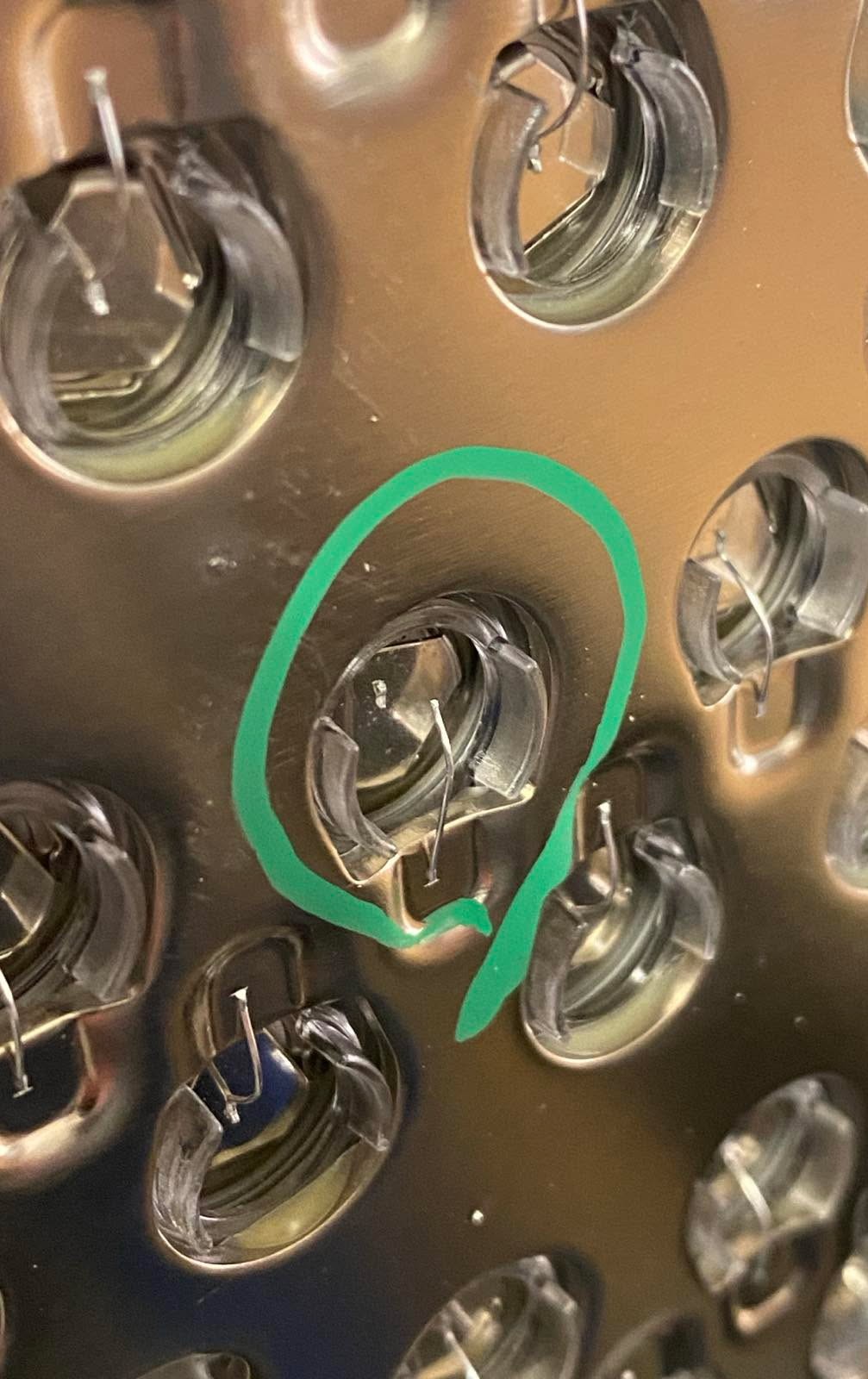
Symptoms of broken wire bond
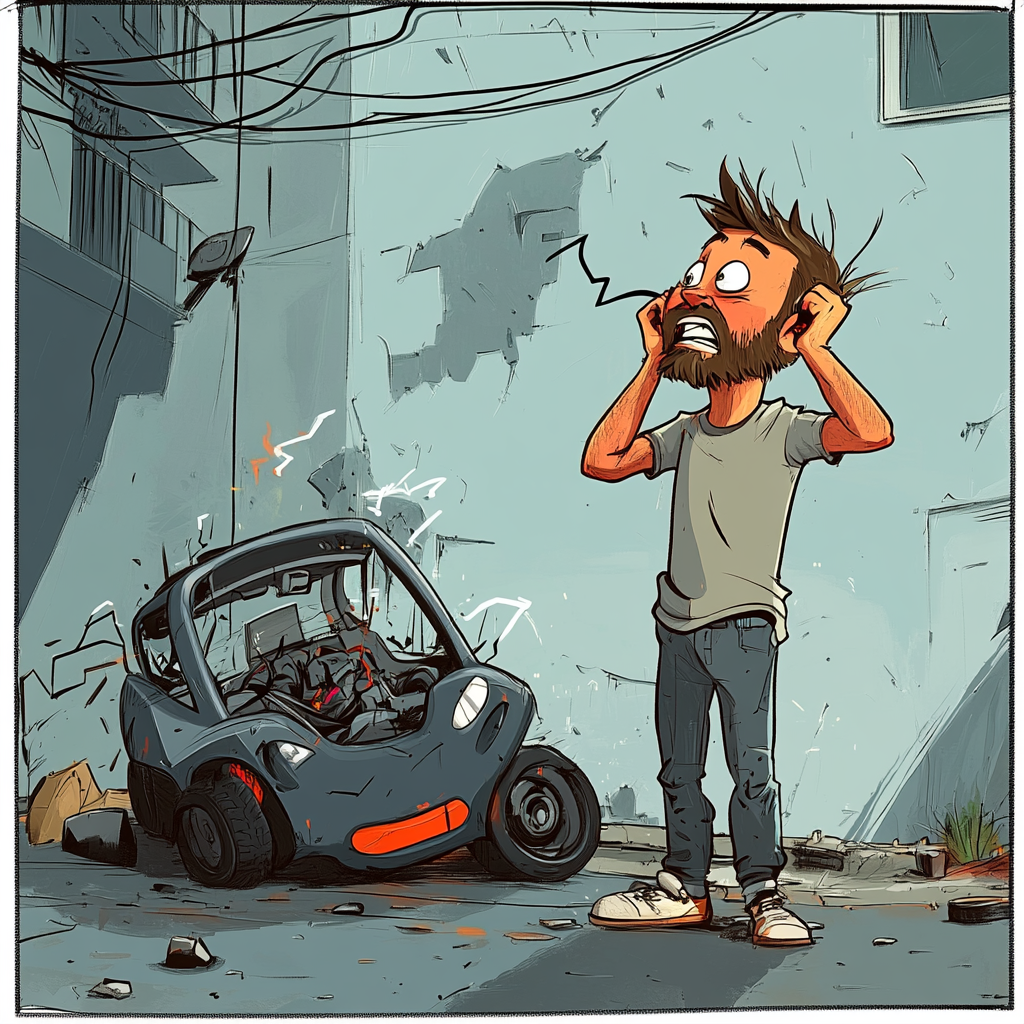
A broken wire bond can cause several types of problems:
- Cell imbalance: The BMS may report abnormal voltages or fail to detect a cell group.
- Reduced range: If parts of the battery pack are disconnected, the available capacity will be lower.
- Warning lights and error messages: You may receive messages such as “battery error,” “reduced power,” or “vehicle cannot start.”
- Charging problems: In severe cases, the car may refuse to charge or shut down completely.
Diagnosis and repair
At EV Fenix AS we are specialists in diagnosing and repairing high voltage faults in electric vehicle batteries. Using thermography, BMS logs and direct measurements we can determine if wire bonds are the problem.
The repair often involves:
- To access the relevant module.
- Carefully re-welding the broken connection with advanced equipment.
- Checking continuity and balance after repair.
- Sealing and re-installation of the battery according to factory standards.
- It's precision work – but it restores the battery's function without the need for costly replacement of the entire module or pack.


Prevention and tips
If you are a Tesla owner, you can reduce the risk as follows:
- Avoid aggressive driving on bad roads.
- Keep the battery level between 20-80% daily to minimize thermal load.
- Contact us if you experience sudden drops in range or strange charging problems.

Broken wire bonds are a problem in some Tesla battery packs, especially after several years of use. Fortunately, it can be repaired with the right equipment and expertise. At EV Fenix AS, we offer advanced diagnostics and repair of electric vehicle batteries – including wire bond repairs on Tesla – centrally located in Jevnaker.
Are you having problems with your battery, or would you like a professional check? Contact us today.
 English
  Norwegian